March 17th, 2025 Monday
11 North Bound 0 South Bound 8 hrs
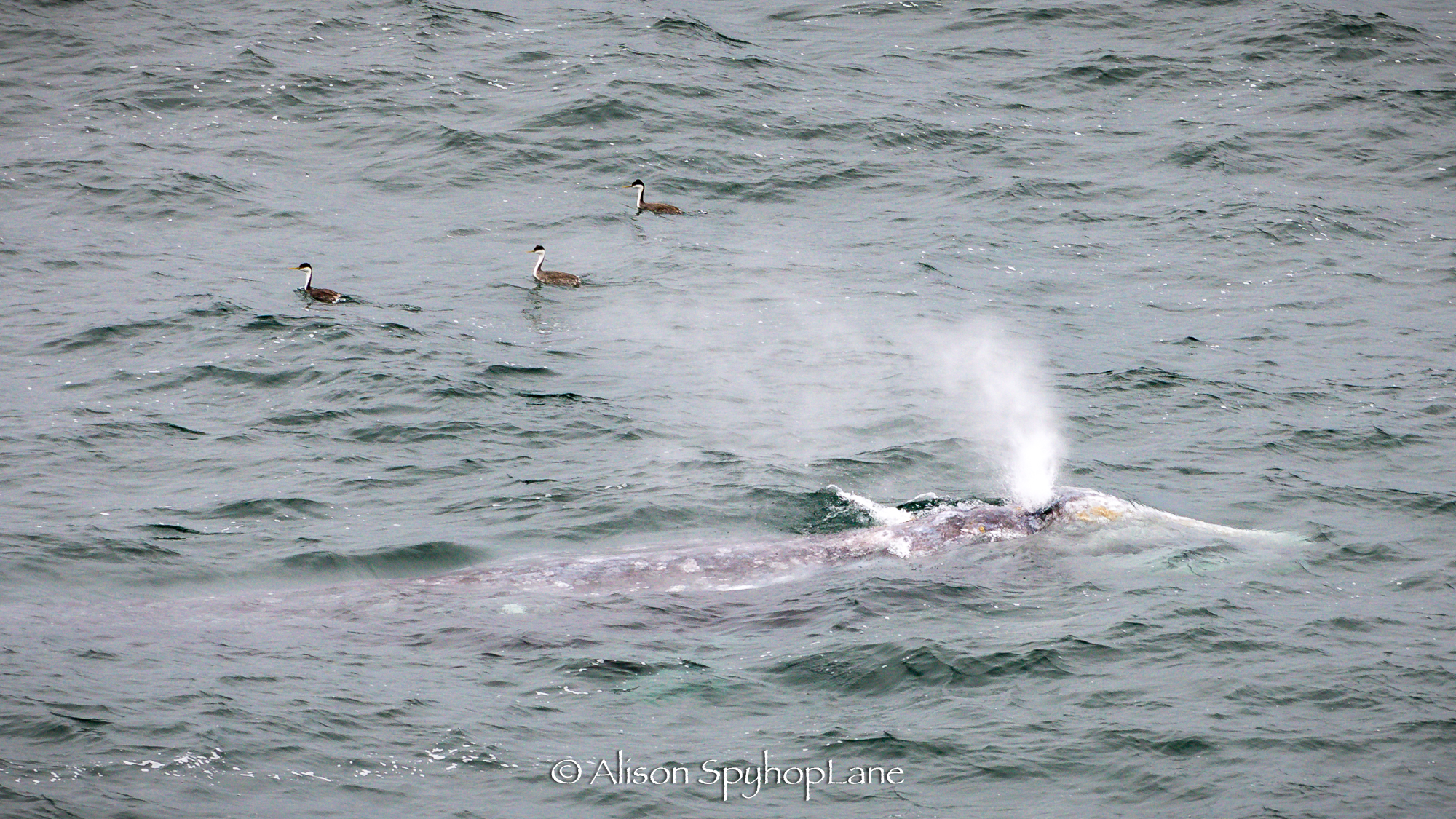
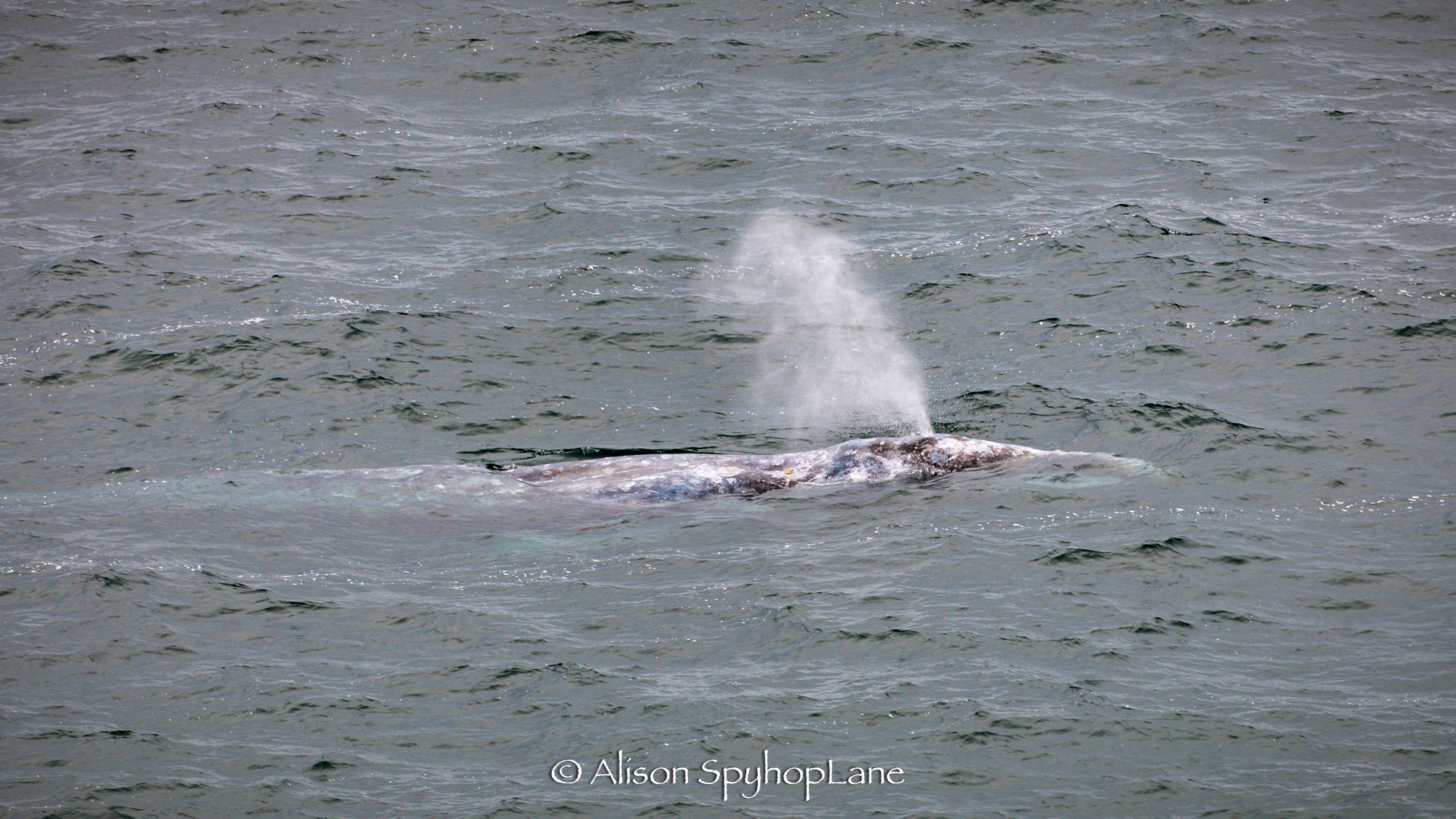
Happy St. Patricks Day! The luck of the Irish was with us today spotting 11 North Bound Gray Whales despite the rain, wind and rough choppy seas!!!
Water Temperature 53 degrees. The 1st pair of Gray Whales traveled through quickly. The next few whales came through in a light rain squall. Two solos and a trio that separated into a pair and solo. A thick fog bank rolled in quickly obscuring visibility for over an hour.


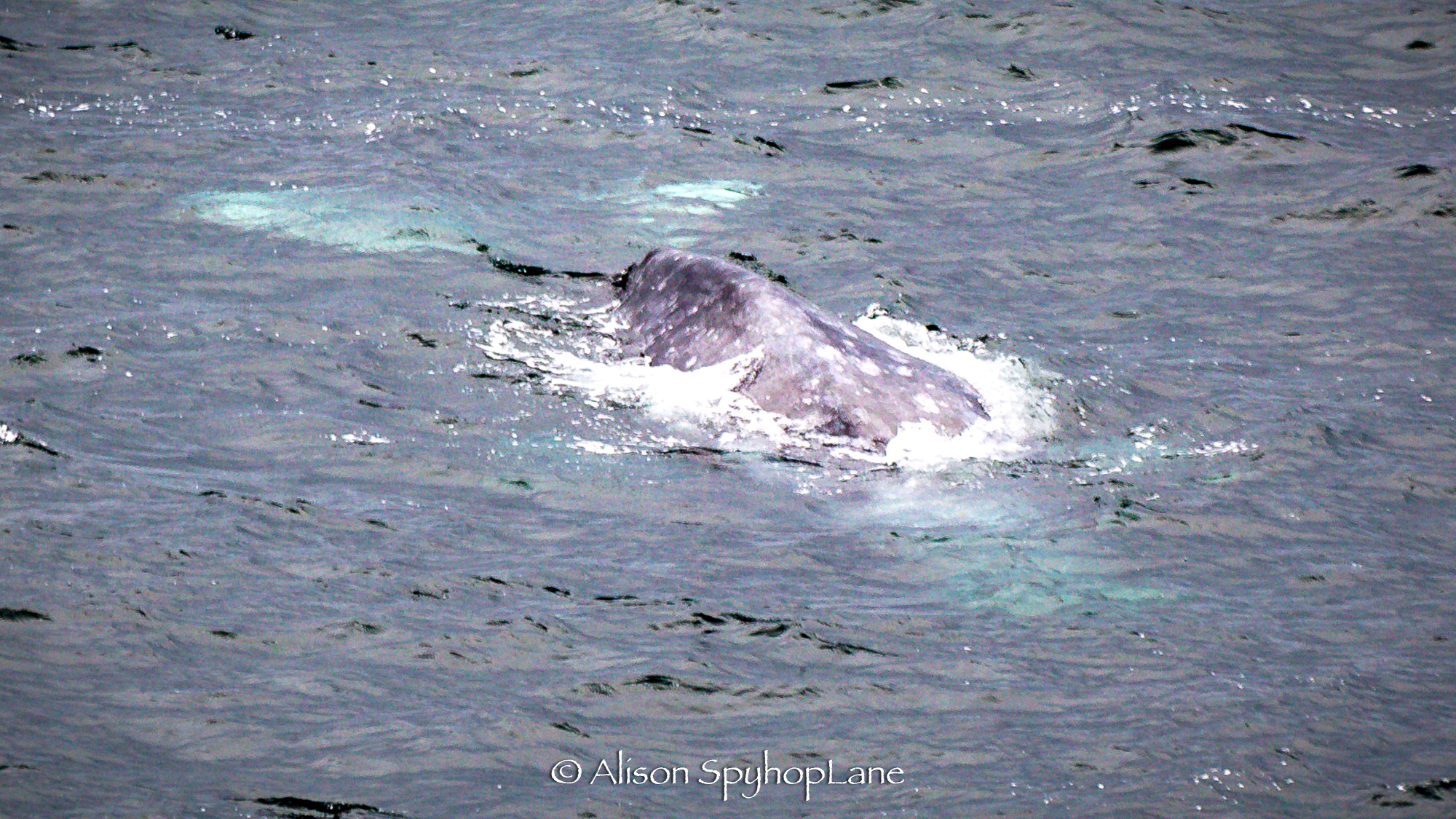
One solo emaciated (thin) underweight Gray Whale with indications of malnutrition; including: visible lack of body fat in the scapula area, dip behind head and concave areas along the thoracic spine indicated a severe loss of fat pad. The whale had areas of pigmentation loss that glowed under water, including the dorsal views of the fluke.
Whale blubber (fat) provides nutrients and calories needed for the health of Gray Whales during the migration North and South. The dense 5-6″ thick fat layer provides adequate thermal protection in the cold arctic waters. The rotund shape of the blubber layer provides smooth contours and provides buoyancy which helps the whale stay afloat in the water, increasing efficiency while swimming with less drag. Thin underweight malnourished whales use more energy swimming and increased calorie needs to regulate body temperature. Swimming is less efficient taking longer to get to south and back up north to the feeding grounds. The effects of poor body condition prohibit females from carrying a pregnancy to term. Less calves were born in 2024 and no Gray Whale calves were seen on the southern migration for the 1st time in 40 years of the ACS-LA Gray Whale Census and Behavior projects study. The Lagoons in Baja Mexico are reporting lower than normal calves in 2025. Starvation is the most severe form of malnutrition with no evidence of body fat and risks of severe damage to internal body organs. Disorientation can occur increasing ship strikes as the whales fail to avert impact.




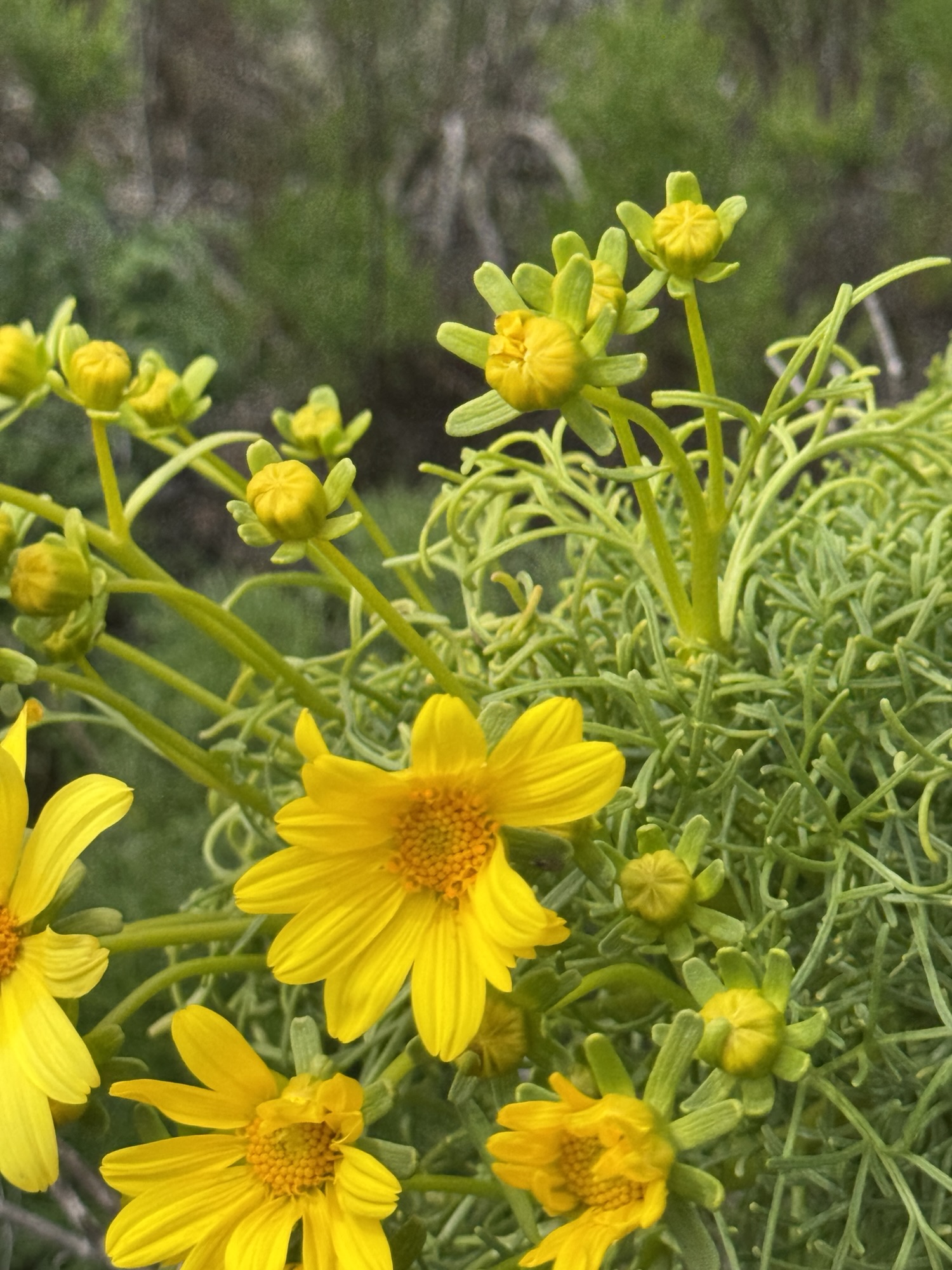
Giant Coreopsis with less than 5% of plants with blooms and 50% with multiple buds.


A sub adult Sea Lion on shore in Pirates cove resting on the bare rocks. California Wildlife Center-Marine Mammal Rescue (CWC-MMR) notified who shared they are keeping a close eye on this animal. Rescue is inhibited by the location and safety to the volunteers at this time. The cove is currently void of 90% of its sandy shore. Large boulders exposed making it dangerous and difficult to traverse.
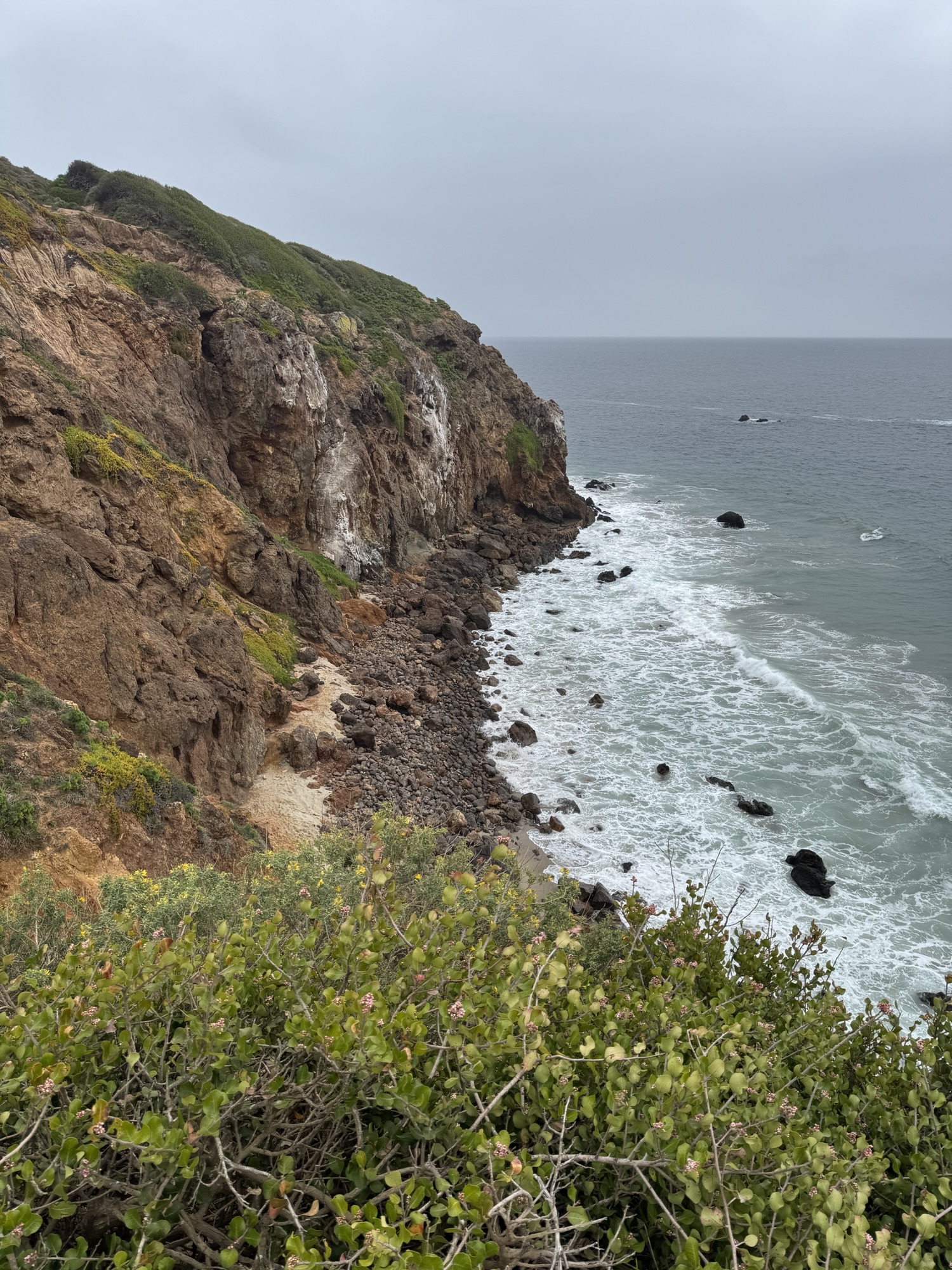

Late in the afternoon wind picked up 25+mph. Gusts reaching up to 35+mph creating what is called upwellling in the ocean. It is a critical action the wind provides to move the warmer upper layer of the ocean away, allowing the cold nutrient dense water below to come to the top layer of water. The Phytoplankton feeds on the nutrients brought up to support the zooplankton and fish that feed in the kelp including the sea lions and dolphins who eat the fish. Shore birds and sea birds also depend on this cycle of phytoplankton production for abundance of bait fish. Some whales that stop by Point Dume have been observed feeding. Any fecal matter left also contributes to the food chain. A productive ecosystem generates an abundance of diverse sea life.
Red algae Domoic Acid (DA) blooms can also occur with increased storm debris and urban run off into creeks and storm drains from plants (tree limbs, grass clippings, leaves and twigs) break down into nitrogen and phosphate which contributes to an increase in Phytoplankton bloom including the micro algae red tide diatom, Pseudo-nitzschia. It produces a neurotoxic Domoic Acid (DA). Schooling fish ( ie anchovies and sardines) eat the DA producing algae, become contaminated and then marine mammals including Sea Lions, Dolphins , Large Baleen whales (Blue, Humpback, Fin, Minke) and shore birds (California Brown Pelicans) eat the contaminated fish leading to DA poisoning. The DA can cause dehydration, seizures, brain or heart damage to animals that eat the contaminated fish with DA. Large baleen whales that eat contaminated fish (anchovies and sardines) can also become sick with DA. The volume of contaminated fish consumed will determine the severity of DA toxic effects. Some animals will not survive and others can be saved by prompt treatments from specialized Wildlife Marine Mammal Rescue teams and Wildlife Shore Bird Rescue teams. The treatments may include: anti-seizure medications as needed, Intravenous fluids for hydration and re-feeding with non contaminated fish. Animals suffering with DA have a 50/50 chance of survival. Sea Lions will display odd behaviors including what is known as “star gazing” where their heads are pointed up to the sky with rolling neck movements or head bobbing, seizures with or without foaming at the mouth, erratic and or aggressive behaviors towards swimmers or surfers. Some animals quietly strand on the beach too weak to go back in and may roll in and out of the surf in obvious distress. Pelicans can be seen alone on shore away from the beach wandering in traffic or crouched down next to shrubs. They can be found in weak condition unable to lift up to move. Dolphins can wash ashore alive or dead from DA which effects navigational skills. Untreated animals can have permanent brain damage or long term neurological effects depending on degree of illness. Many animals die off shore. Alfred Hitchcocks famous movie “The Birds” may have been based on an observation Hitchcock had of shore birds (sooty Shearwaters )he saw in 1961 at Capitola Beach displaying toxic effects of a DA outbreak with effected birds crashing into home windows and lamp posts swarming the shore erratically.
Gray Whales do not eat the fish that eat the red algae (DA), they are bottom feeders that suction the muddy sediment up from the sea floor and consume amphipods and crustaceans. Occasionally they do feed opportunistically on small swarms of krill and lunge feeding on schooling fish has antidotally been reported.
Scientists at Scripps Institute of Oceanography- University of California San Diego (UCSD) published a paper in 2018 identified the genes responsible for production of Domoic Acid. Next steps are to study the conditions that regulate the genes that produce the DA and then they can better predict the algal blooms for the future.
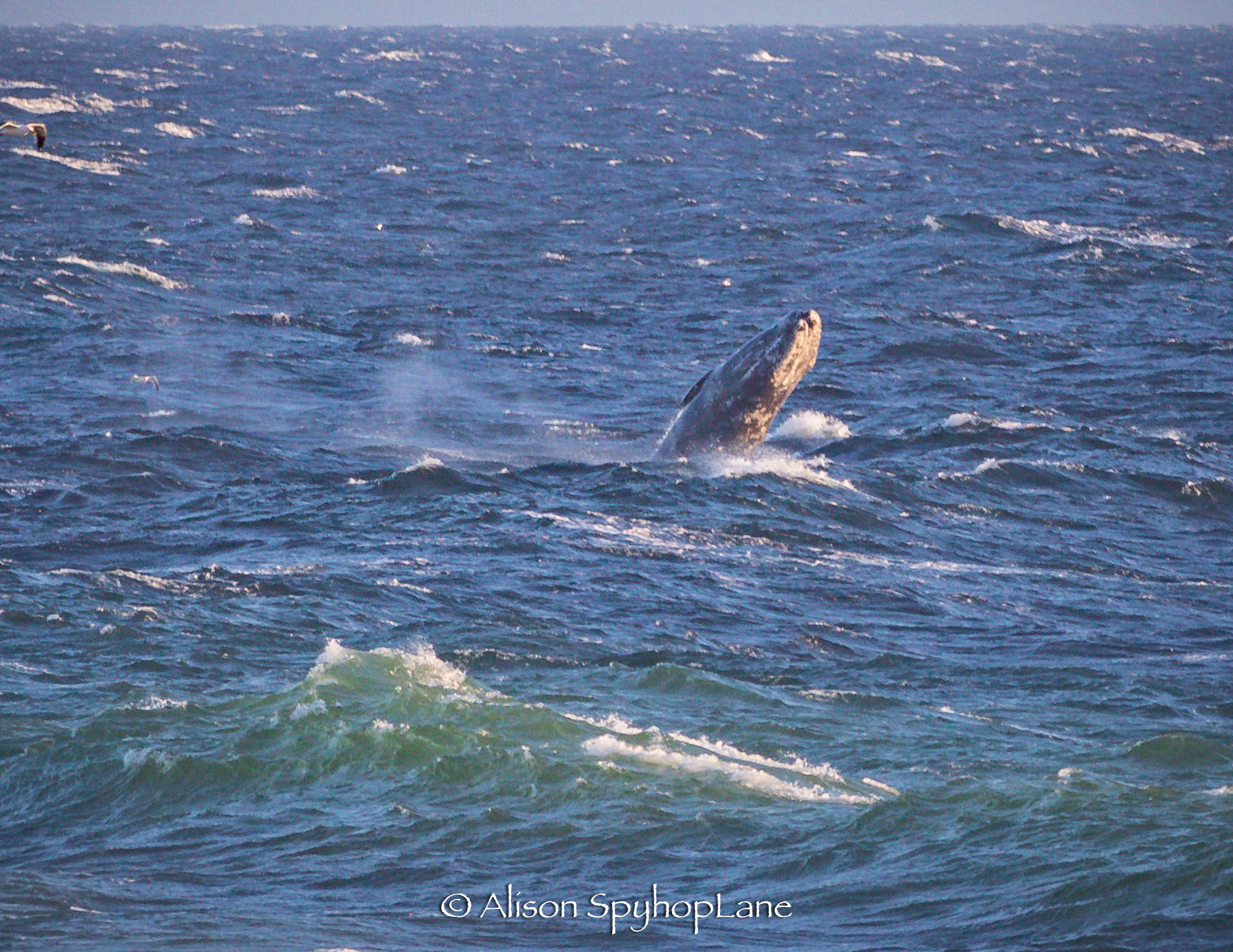
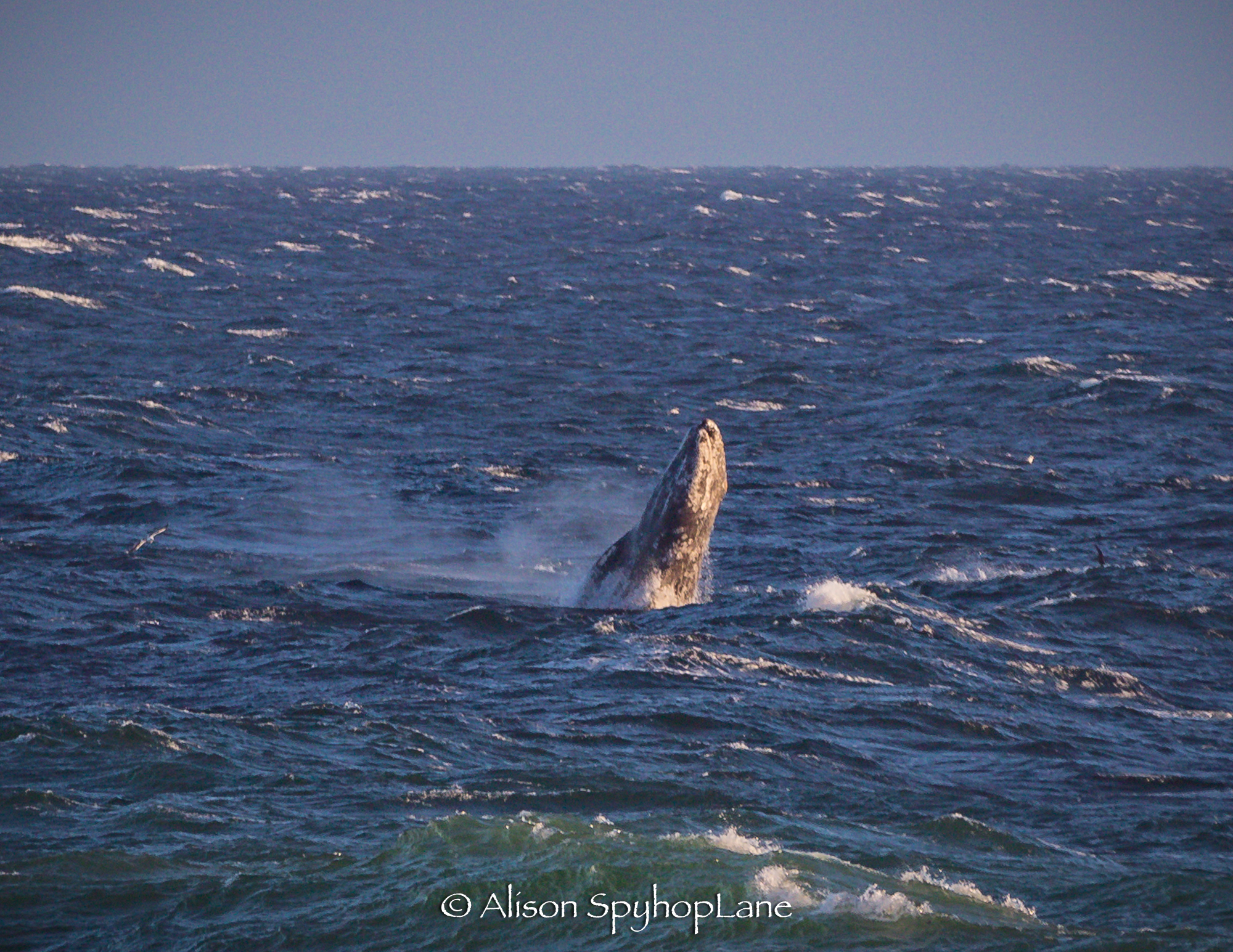
The first Gray Whale Breach of the Season was seen in rough choppy seas with near gale winds over 30 mph.


Hundreds of Velella Velella or “by-the-wind sailors” washed ashore with the tide. These bright blue jellyfish like organisms are Hydrozoans (Cnidarians) which live at the surface of the open ocean, feeding on plankton or small prey. Their movements are directed by the wind. A thin sail on top propels and a blue underside with tentacles is used to sting small prey with nematocyst toxin which isn’t dangerous to humans but some individuals may have reactions such as itching and it is recommended to wash hands or any body part that come in contact.

Thank you for reading the post and caring about the Gray Whales. If you would like to be notified of updates and new posts, please add your email in the box below to receive notification.

 Spyhop Lane