16 North Bound 0 South Bound 7.75 hrs
March 15, 2025 Saturday
Sunny 62 degrees, water 52 degrees, Wind 8-10 mph increased 18-20 with Gusts over 25 mph in late afternoon. 9 sightings included a quad that split into two pairs. 5 solos, 3 pairs.
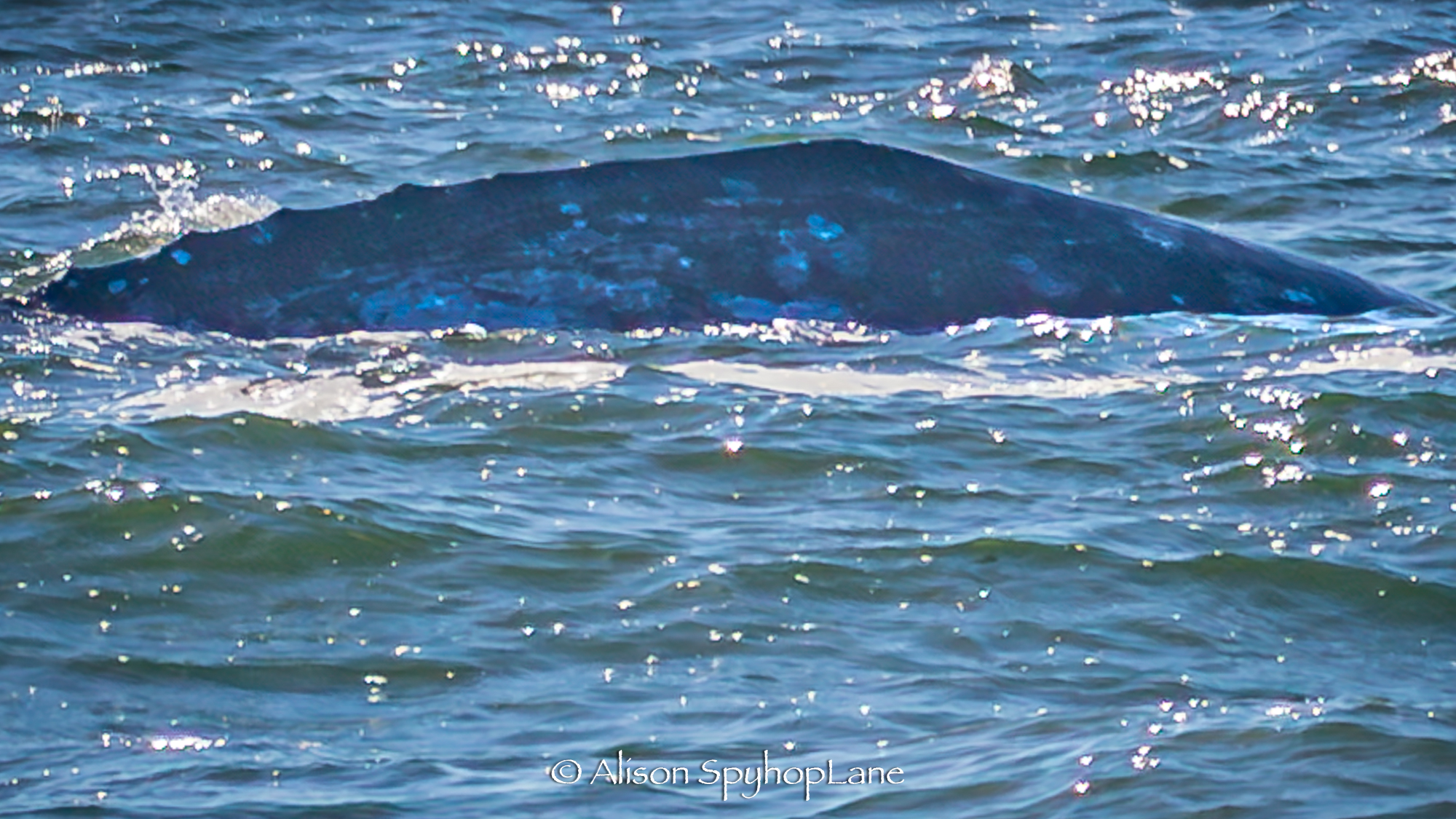
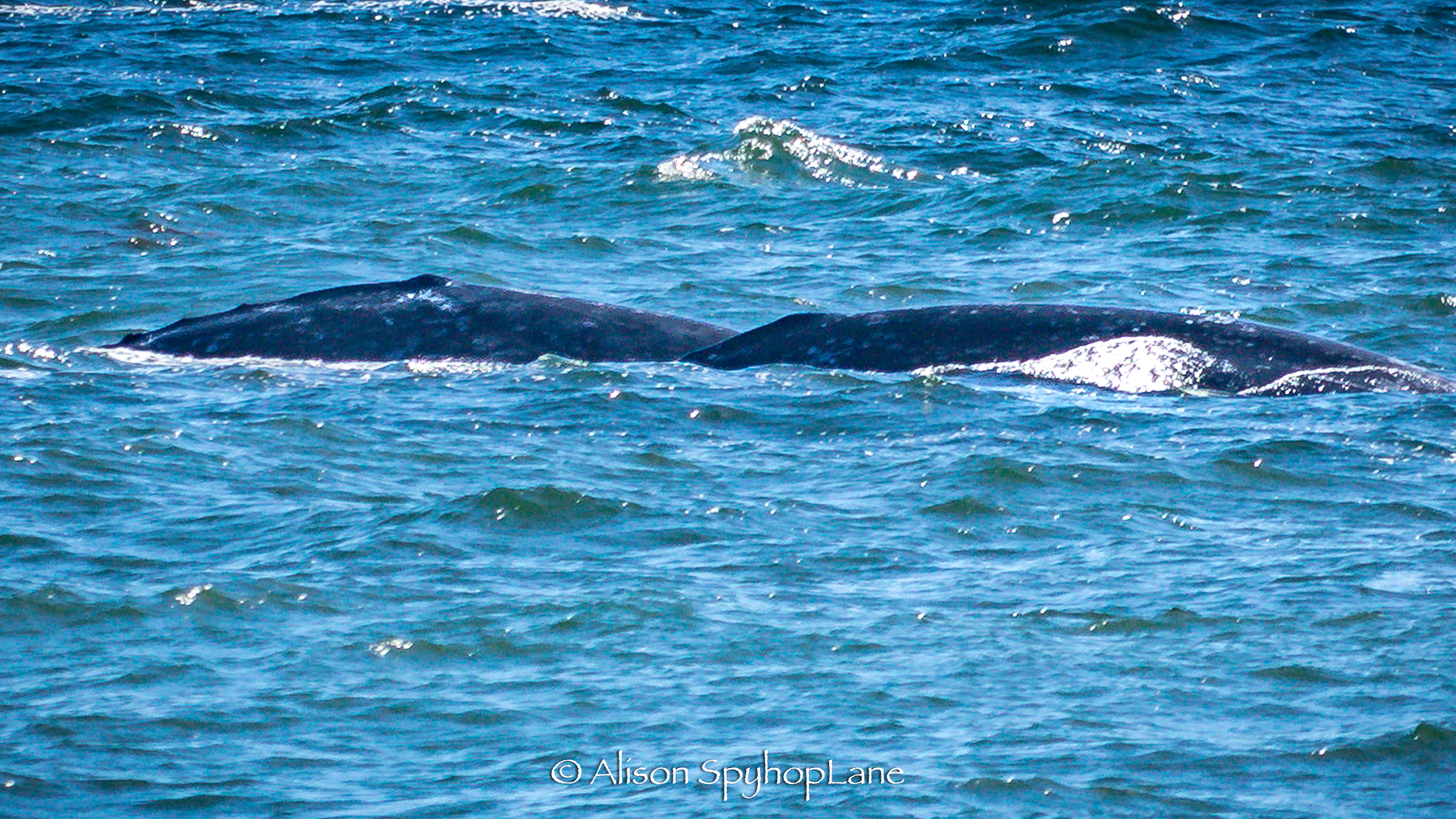
Several Gray Whales traveled close to shore today with good looks possible one was thin indicating a loss of blubber. One whale in a pair sighting had set of small identification white patches under the dorsal hump in the shape of an arch.



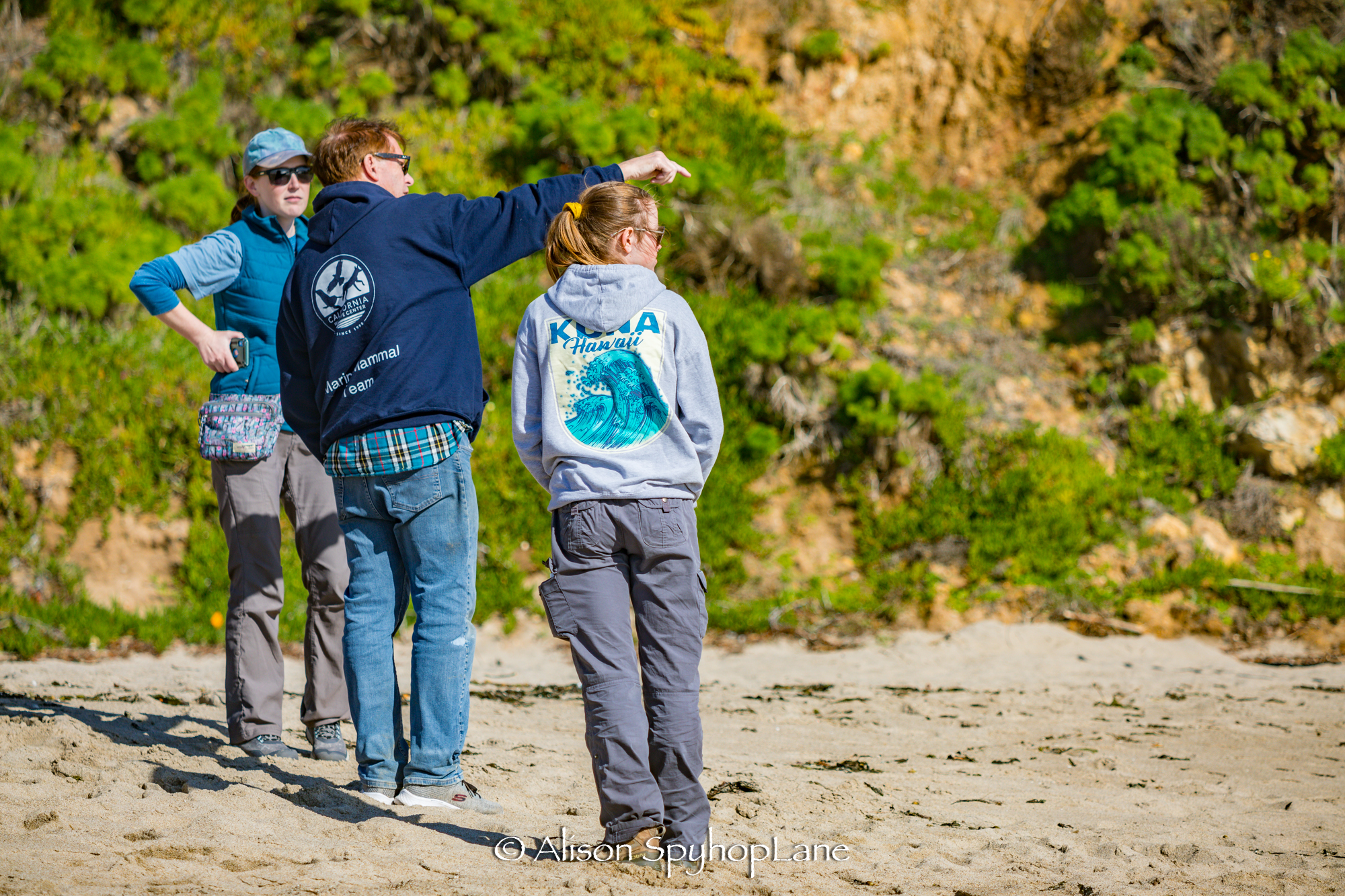
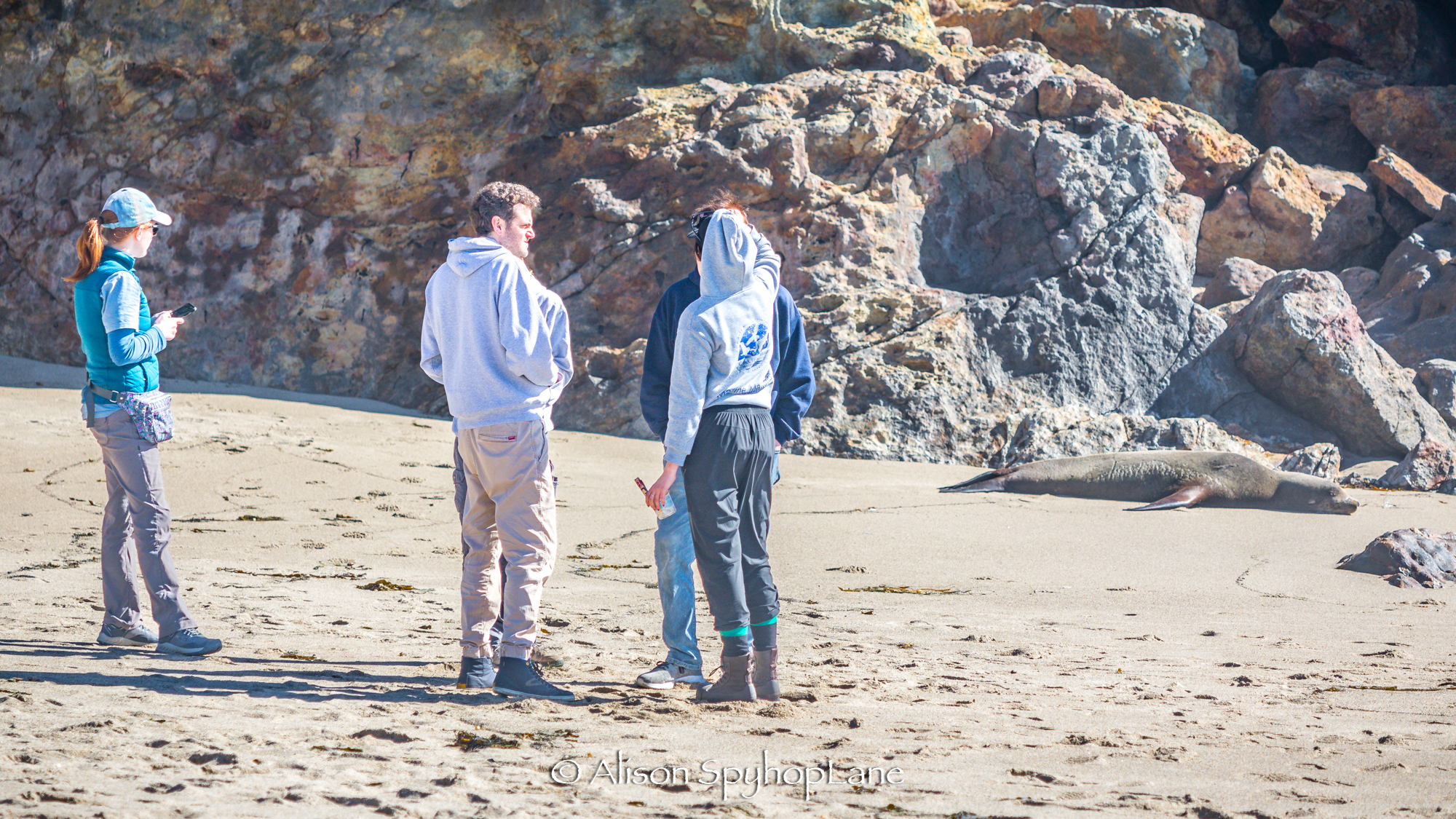
MARINE MAMMAL RESCUE : Stranded sub adult Male Sea Lion
California Wildlife Center’s Marine Mammal Rescue Team (CWC_MMR) visited to check on stranded sub adult Male Seal Lion. Care was taken not to disturb the sick and lethargic mammal. Unfortunately the rescue centers are full. The CWC is getting up to 100 calls a day about sick or injured animals. The male (bull) animals must be sent to different locations, separate from the females. With so many animals infected with the Domoic Acid (DA) in this Red Algea bloom the team must help the animals who are most likely to survive this outbreak and are out today to re-asses this animal and determine if it can remaining resting onshore or be brought in urgently for treatments.
To Report a sick or injured Marine Mammal or Injured Shore Bird please call the California Wildlife Center: Marine Mammal Rescue Hotline….
Please take photo of the animal and injury without disturbing the animal.
DO NOT TOUCH THE ANIMAL
Be Prepared to STAY until you speak to the center and KEEP OTHERS AWAY at least 50 ft if possible to protect the wildlife and yourself. You can also speak to the lifeguard on duty to provide help if possible.
The Wildlife Center will ask you to text a photo to them to assess the situation.
Call (310)924-7256

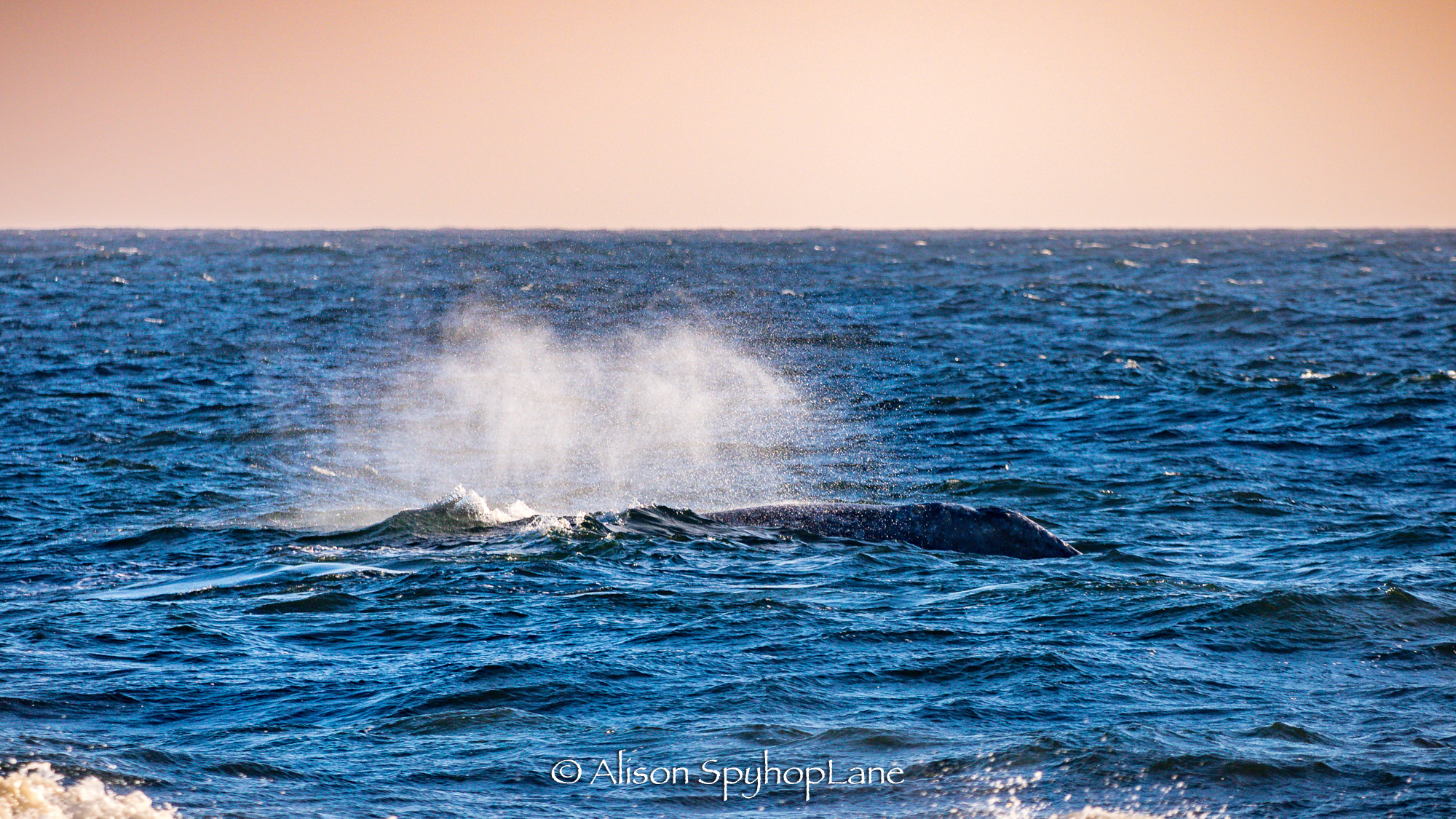
Several Gray Whales traveled through further off shore at a steady faster pace, with longer soundings (deep underwater dives).


One Gray Whale arrived after sunset just in time to be counted in the rough surf and strong gusty winds.
Thank you for reading the post and caring about the Gray Whales. If you would like to be notified of updates or new posts, please add your email in the box below to receive notifications.

Get notifications of new posts delivered directly to your inbox.
Domoic Acid from Red Algae Blooms:
Red algae Domoic Acid (DA) blooms can also occur with increased storm debris and urban run off into creeks and storm drains from plants (tree limbs, grass clippings, leaves and twigs) break down into nitrogen and phosphate which contributes to an increase in Phytoplankton bloom including the micro algae red tide diatom, Pseudo-nitzschia. It produces a neurotoxic Domoic Acid (DA). Schooling fish ( ie anchovies and sardines) eat the DA producing algae, become contaminated and then marine mammals including Sea Lions, Dolphins , Large Baleen whales (Blue, Humpback, Fin, Minke) and shore birds (California Brown Pelicans) eat the contaminated fish leading to DA poisoning. The DA can cause dehydration, seizures, brain or heart damage to animals that eat the contaminated fish with DA. Large baleen whales that eat contaminated fish (anchovies and sardines) can also become sick with DA. The volume of contaminated fish consumed will determine the severity of DA toxic effects. Some animals will not survive and others can be saved by prompt treatments from specialized Wildlife Marine Mammal Rescue teams and Wildlife Shore Bird Rescue teams. The treatments may include: anti-seizure medications as needed, Intravenous fluids for hydration and re-feeding with non contaminated fish. Animals suffering with DA have a 50/50 chance of survival. Sea Lions will display odd behaviors including what is known as “star gazing” where their heads are pointed up to the sky with rolling neck movements or head bobbing, seizures with or without foaming at the mouth, erratic and or aggressive behaviors towards swimmers or surfers. Some animals quietly strand on the beach too weak to go back in and may roll in and out of the surf in obvious distress. Pelicans can be seen alone on shore away from the beach wandering in traffic or crouched down next to shrubs. They can be found in weak condition unable to lift up to move. Dolphins can wash ashore alive or dead from DA which effects navigational skills. Untreated animals can have permanent brain damage or long term neurological effects depending on degree of illness. Many animals die off shore. Alfred Hitchcocks famous movie “The Birds” may have been based on an observation Hitchcock had of shore birds (sooty Shearwaters )he saw in 1961 at Capitola Beach displaying toxic effects of a DA outbreak with effected birds crashing into home windows and lamp posts swarming the shore erratically.
Gray Whales do not eat the fish that eat the red algae (DA), they are bottom feeders that suction the muddy sediment up from the sea floor and consume amphipods and crustaceans. Occasionally they do feed opportunistically on small swarms of krill and lunge feeding on schooling fish has antidotally been reported.
Scientists at Scripps Institute of Oceanography- University of California San Diego (UCSD) published a paper in 2018 identified the genes responsible for production of Domoic Acid. Next steps are to study the conditions that regulate the genes that produce the DA and then they can better predict the algal blooms for the future.
 Spyhop Lane